Materials & Applications
How to Choose Sequin Embroidery Fabric: Base, Size and Coverage
Two sequin fabrics can look similar in a small photograph and behave differently in a garment. For a useful quotation, describe the base, decoration and intended use separately. This guide helps designers and sourcing teams turn a visual reference into a sample request that Zhijin can review.
Sequin embroidery fabric selection: Start with the fabric that remains in the garment
Ask for the composition and construction of the finished base, its usable width and any required stretch direction. A description such as mesh does not establish stretch, weight or opacity. If the design uses a lining, review the embroidered material together with that lining rather than assessing either layer alone.
An embroidery backing or stabiliser supports the stitching process; it is a separate specification from the finished face fabric. Madeira explains that stabiliser selection depends on the fabric and embroidery. When looking at a swatch, ask which layers are present during production and which remain after finishing.
Sources & further reading
Check stretch and recovery on a decorated dancewear sample
For a fitted dance costume, mark the movement needed at the underarm, hip or other area of the pattern that must extend. On the finished sequin swatch, mark the direction along the roll and across the width. Record the distance between the same two marks before pulling, at the agreed extension and after release at a stated rest time. The extension and the return are two separate observations.
Try the same movement on a small panel made with the intended lining, seam and motif placement. Compare a dense sequin area with a less decorated one. Look for lifted sequins, broken attachment threads, a seam that opens and distortion that remains after release. Use the findings to approve that combination for the pattern, and ask the supplier to identify the exact swatch or lot covered by any stretch figures.
Sources & further reading
Specify the sequins beyond the colour name
Record the sequin shape, nominal size, colour, surface finish and arrangement. Equipment maker ZSK describes sequin devices with different size and colour combinations, illustrating why a design needs a defined decoration specification. Its equipment capabilities do not describe Zhijin’s machinery or guarantee that every combination can be supplied.
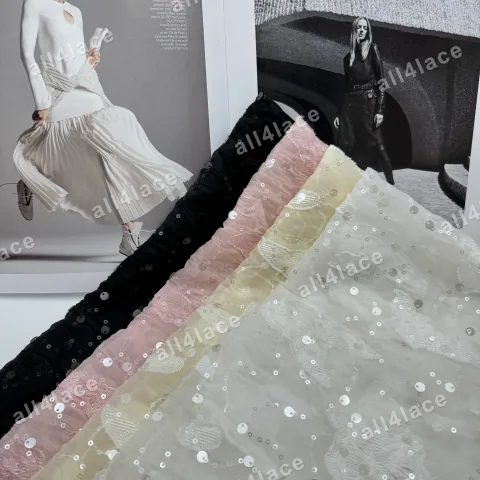
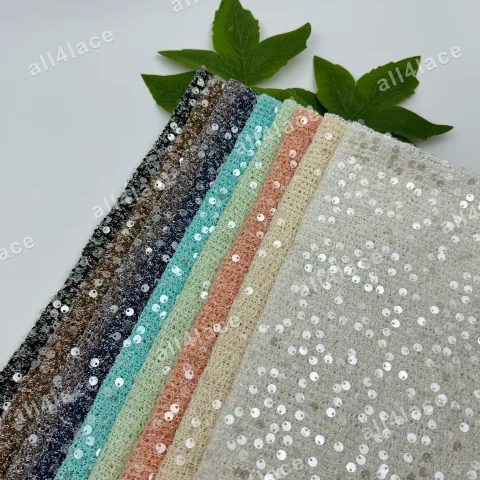
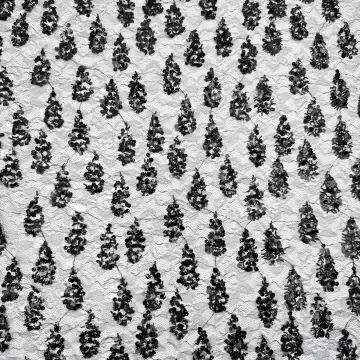
The All4Lace catalogue shows butterfly-and-leaf embroidery and a separate fabric reference, 009, in several colours. Use the photographs to select a visual direction, then request a ruler photograph and the current specification for the exact swatch. A catalogue name or an unscaled photograph does not verify sequin diameter, fabric quality, weight or price.
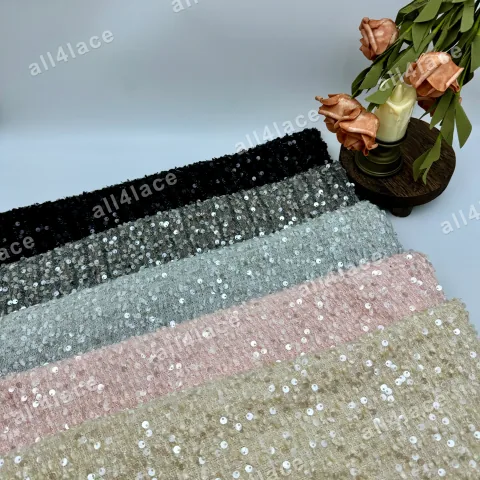
For a transparent look, specify separately whether light should pass through the sequins or through the mesh ground. Use the clear round sequins on polyester mesh shown below as one fabric reference, and compare the swatch over the intended lining. If you need loose sequins for hand application, record that as a separate request.
Sources & further reading
Match coverage and layout to the garment
Send a garment sketch showing which areas need decoration. A close-up cannot show the pattern repeat, unembroidered margins or placement around a seam. Request a full-width image with a scale reference and mark the direction in which the pattern should run.
Use the comparison below to define the development brief. The inspection points are questions to resolve through sampling, rather than universal performance claims about each style.
| Design direction | What to specify | What to review on the sample |
|---|---|---|
| Scattered motifs | Motif spacing, repeat and clear areas | Placement after cutting and the appearance over the intended lining |
| Dense allover embroidery | Decorated width, coverage and pattern direction | Hand feel, drape and attachment appearance in the assembled panel |
| Border or garment panel | Placement drawing, panel size and cutting margins | Alignment at joins, neckline or hem |
Approve a sample that represents the finished application
Review appearance, dimensions, hand feel and decoration attachments against an agreed sample record. These are also categories found in Intertek’s textile inspection guidance. A fabric swatch is useful for choosing a look; a sewn panel can answer additional questions about seams, lining and contact between layers.
Record the sample version and any changes before requesting the bulk quote. If washing, cleaning or pressing performance matters, agree a separate evaluation for the actual material combination. Do not infer an approved care method from the sequin size or from a product photograph.
- Identify the product or attach a marked reference image.
- State the required quantity, usable width and garment application.
- Define base, sequin specification, colour reference and repeat.
- Agree sample format, review criteria and care-evaluation requirements.
Sources & further reading
Choose a sample and plan the trial
Send Zhijin your reference, intended garment and quantity. We can review a catalogue option or a custom sequin embroidery brief, then confirm sampling, quotation and scheduling for that project.