Quality & Delivery
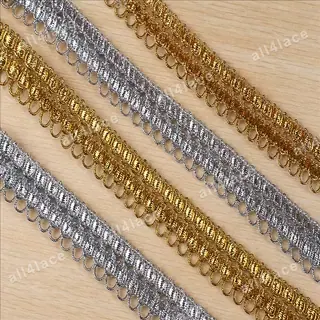
Metallic Loop-Drop Trim: Check Snagging on the Finished Garment
Open decorative loops may look attractive on a card but catch a zipper, bag strap or neighboring fabric in wear. The risk depends on the loop shape and placement. Screen the specific garment combination before deciding that a looped trim is suitable.
Metallic loop-drop trim: inspect loops, loose threads and the carrier
Inspect several repeats from both sides under ordinary light. Note open loops, loose ends and the relation between hanging elements and the supporting band. Photograph any existing catch or distorted loop; a still image cannot prove strength or snag resistance.
Loop-drop trim snagging: check zips, lining and accessories together
Attach a short sample with the intended stitch and place it beside the planned closure, lining and accessories. Move the panel through realistic dressing and carrying motions, without applying destructive force. Record where a loop catches and whether the garment can be redesigned to avoid contact.
Loop-drop trim: distinguish handling observations from formal testing
Classify concerns as trim construction, placement or neighboring hardware. Approve a sewn reference and list excluded high-contact areas if necessary. A simple handling screen is not a laboratory test; request an agreed formal method if performance must be certified.
Discuss your embroidery project
Share the intended garment position and adjacent hardware with All4Lace for sample selection.
Contact Zhijin