Customization & Sampling
Floral Vine Trim: Match Motif Spacing to the Garment
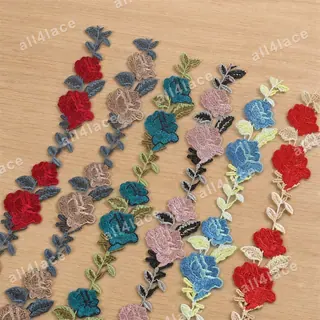
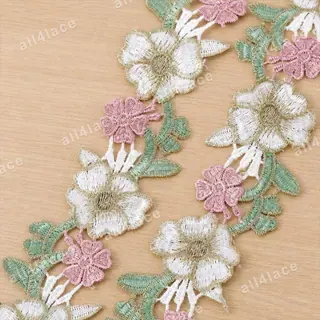
A floral vine border may alternate large and small sprays. Cutting by centimetres alone can place a large flower at one sleeve edge and a small one at the other. Inspect a full repeat before approving symmetric pieces.
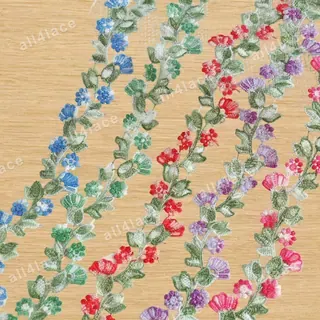
Floral vine trim: measure major flowers, minor flowers and full repeats
Lay out at least two repeat cycles and label the centres of the major and minor flowers. Record repeat length and which side of the tape is intended to face out. Photograph the layout against a scale; a cropped product image cannot establish all positions.
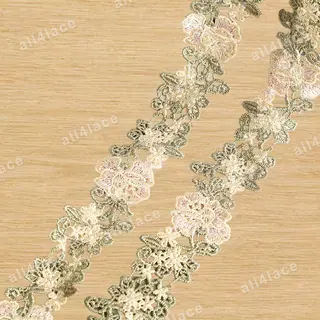
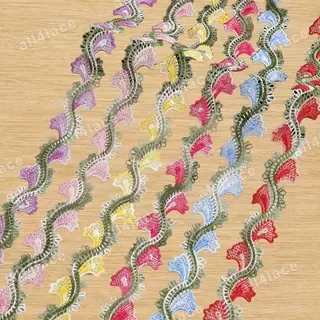
Try the same marking method on the wavy leaf trim below. Mark where a leaf meets the green wave, then check where that point falls on each garment piece.
Match floral-vine motif positions across paired garment panels
Place left and right pattern pieces beside the uncut trim. Mark centre-front, seam and cuff positions on paper strips before cutting. Baste paired samples and view them worn or suspended, checking whether mirrored placement remains balanced after the seam allowance is hidden.
Floral-vine approval: landmark positions and permitted variation
Approve the flower position at one or two visual landmarks and the allowed difference elsewhere. Compute required length from paired placement, including complete repeats reserved for each piece. If exact mirroring is impossible, document the deliberate asymmetry.
Discuss your embroidery project
Share the garment pattern and desired flower landmarks with All4Lace for sample planning.
Contact Zhijin