All articles

Materials & Applications

How to Tell Hand Crochet from Machine-Made Crochet-Look Lace

Zhijin / All4LacePublished Updated
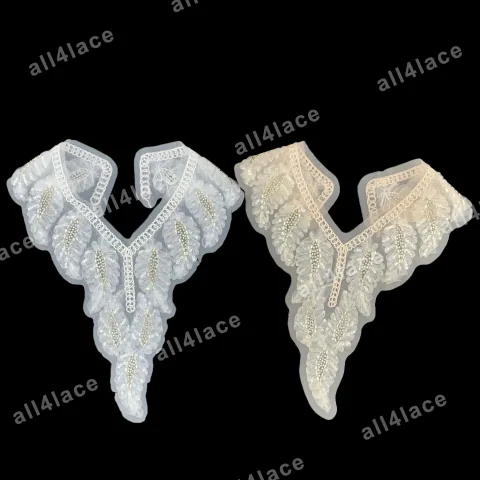
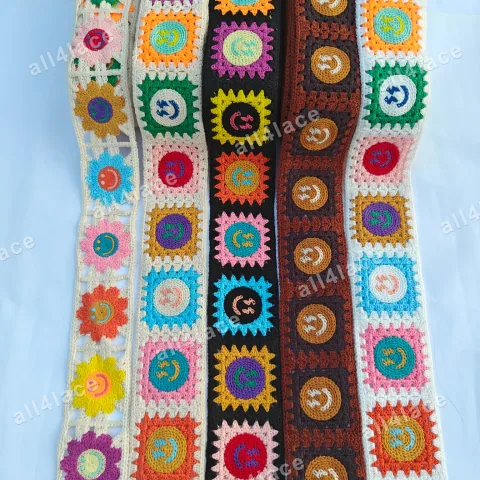
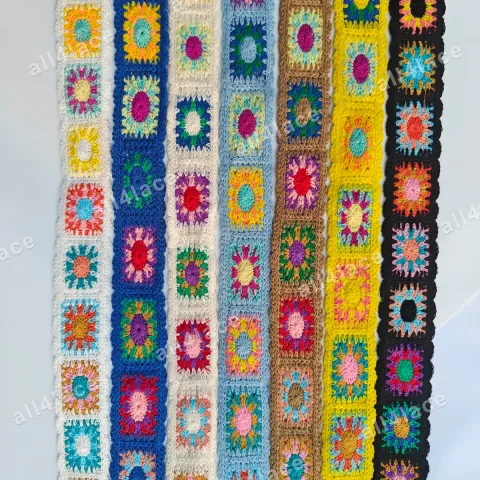
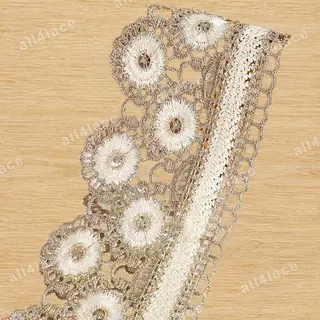
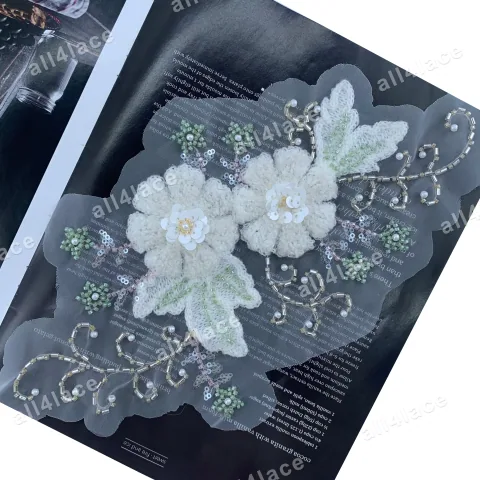
All4Lace product example. Confirm the selected item and specification with Zhijin.

Turn the lace over. When I inspect crochet lace, the back is the first place I look. You can follow the yarn and see how the stitches and motifs connect. In my experience, that tells me more than small irregularities on the front.

How do hand crochet and machine-made crochet-look lace differ on the back?

On many machine-made crochet-look trims, you can see threads crossing between stitches or motifs. Follow one of those threads to both ends. If it connects the same points on several motifs, you can see how the repeated pattern is held together.

On many hand-crocheted pieces, you can trace the yarn through individual loops and joins. A strand crossing the back is a clue. Look at where it enters the stitches and what it connects before drawing a conclusion.

DMC’s stitch guide shows how a hook draws yarn through an existing loop. In the Powerhouse collection’s Irish crochet flounce, motifs were worked separately and joined with a mesh ground. Trace the yarn through a complete repeat and across a motif join to see how your sample is held together.

What other clues help identify machine-made crochet-look lace?

Check how closely the motifs match, how even the tension is, and how the motifs join. These clues are most useful when you compare several repeats.

Use yarn paths, loop tension and repeat spacing together. If hand manufacture is part of the order specification, ask the supplier to confirm the method in writing against the exact sample reference.

  • Repeat accuracy. Machine-made trims often repeat the same motif and join positions consistently over a long length.
  • Yarn tension. Machine-made loops tend to be even in size. Hand crochet can show small differences in how tightly the loops are worked.
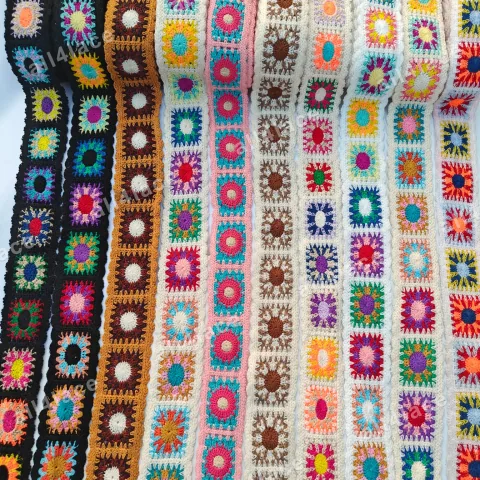
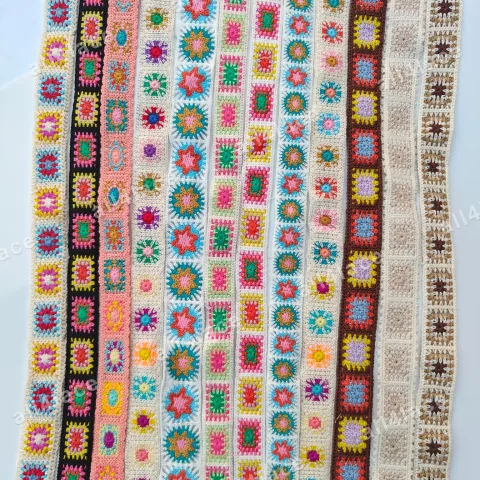
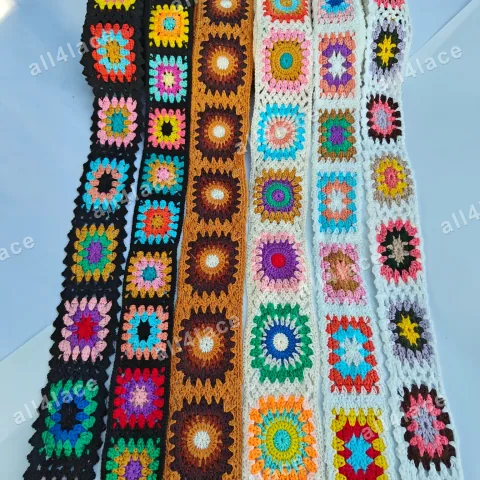
  • Motif construction. A granny-square-style machine-made trim may use the same simple connector at each join.

When is machine-made crochet-look lace a good choice?

Machine-made crochet-look lace is useful when you want the look of hand crochet and need consistent repeats at scale. That is why it is used for fashion trims and granny-square-style textiles.

If you only have time for one check, turn it over and follow a thread through a join.

Discuss your embroidery project

Send Zhijin a marked reference and explain whether you need a crochet-inspired appearance or a specific construction method. We can review the selected lace or discuss a development sample without assuming the two requirements are identical.

Contact Zhijin
Factory Direct Lace & Embroidery Wholesale

We work with wholesalers as long-term overseas partners. Choose existing styles at competitive factory prices, test a mixed assortment, and build a repeat supply with us. Many products are in stock; ask us to confirm your exact references, colours and quantities.

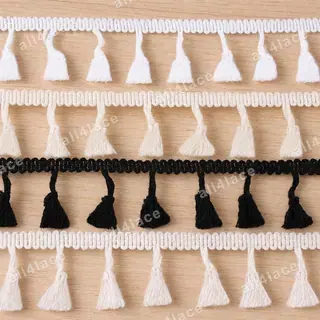
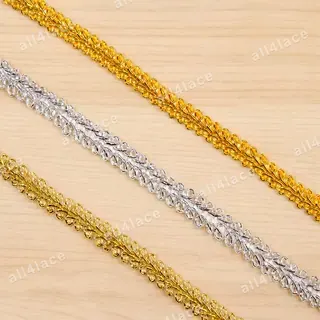
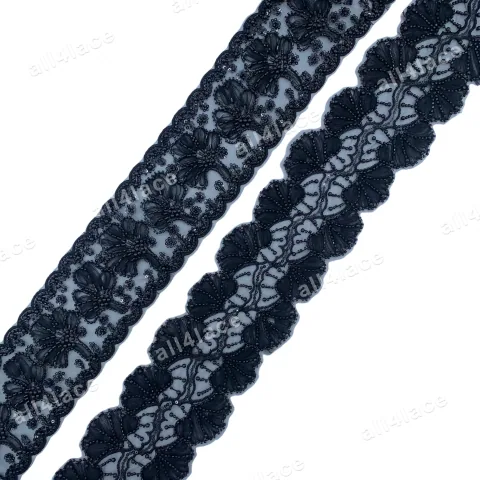
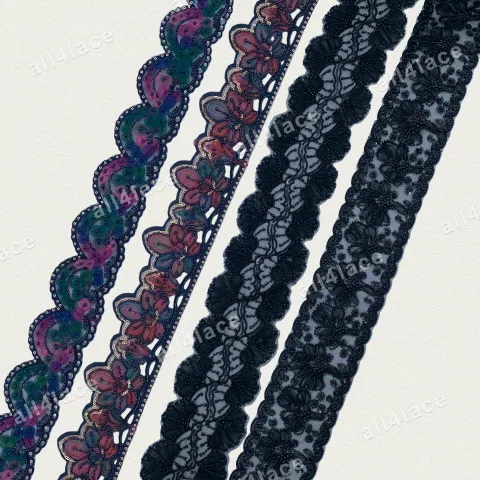
Lace & Embroidery for Abaya Wholesale BuyersCompare dark floral borders, ivory lace, metallic-looking braid and neckline pieces for your Abaya customers. Build a list by reference, colour and quotation unit, then request current stock and a complete numbered catalogue.Matching references: 26Browse all productsFloral Lace & Colourful Trims for Childrenswear BuyersStart with small floral repeats, colourful square-look trims, soft-tone vine borders and collar pieces. Compare the actual sample on the intended garment and confirm material, dimensions, care and the requirements for the intended child age group.Matching references: 16Browse all productsSequin Fabrics, Beaded Appliques & Lace for Eveningwear WholesaleSelect from continuous sequin and embellished fabrics alongside individual floral and neckline pieces. Compare motif scale, transparency and quotation units before arranging samples, mixed quantities and packing for your market.Matching references: 16Browse all productsWhite & Ivory Floral Lace WholesaleCompare openwork flowers, eyelet edges and sheer floral borders by the yard. For a resale range, separate solid-looking openwork from transparent mesh-backed styles so your customers can choose the finish they need. Photographed whites and ivories require a physical shade comparison.Matching references: 24Browse all productsBohemian Crochet-Look Lace TrimsChoose floral, circular and square-pattern trims with a handmade-like appearance produced by a special machine process. Compare repeat size, edge shape and colour layout for your customers. These are imitation-hand-crochet products; confirm the actual construction and application on a sample.Matching references: 6Browse all productsMiddle Eastern Black Embellished TrimsTen distinct black mesh borders with rosettes, leaves, paisley shapes and pointed repeats. Each reference has an overall photograph and a ruler reference image. Compare the stitching margin, motif height and transparency for Abaya cuffs, hems or panels on your own garment sample; request confirmed finished measurements.Matching references: 10Browse all productsFloral Appliques & Neckline Pieces WholesaleCompare individual floral and neckline pieces, quoted by the piece. Keep these separate from continuous lace sold by the yard. Before resale, confirm the dimensions, selected colour, orientation and how many individual pieces are included; a group photo does not define a pair or set.Matching references: 19Browse all productsSequin & Embellished Fabrics WholesaleCompare wholesale sequin and beaded fabrics. Confirm the order unit for each style. Check usable width, composition and care on a cutting sample.Matching references: 172Browse all productsFringe, Braid & Pom-Pom Trims WholesaleOrder braid, pom-pom and fringe trims for garments by the yard. Compare how flat braid follows a curve, how closely the pom-poms are spaced and how far fringe hangs below the stitch line. For a wholesale quote, send the reference, colour and continuous length you need. Ask for a sample and confirm the available roll length.Matching references: 24Browse all products

Continue reading