Customization & Sampling
Colour-Block Sequin Trim: Plan Separate Colour Bands
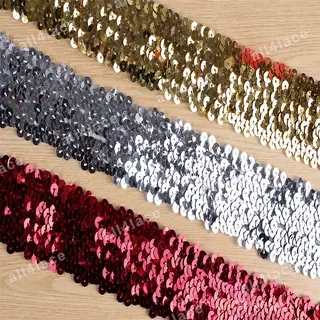
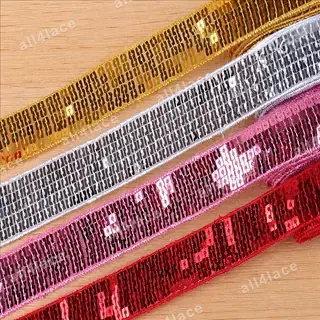
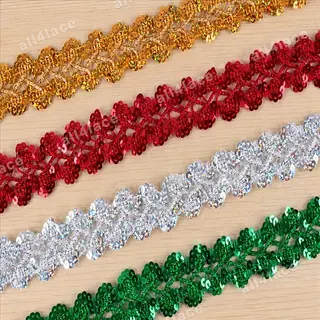
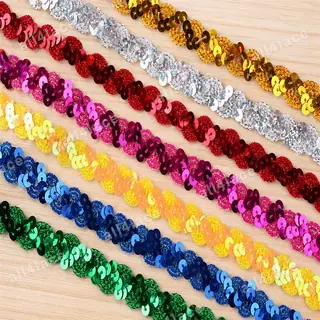
The catalogue photograph shows separate sequin bands in different colours, not a continuous roll that changes colour. To create colour blocks on a garment, specify the individual colour references and plan how each band begins, ends and joins.
Colour-block sequin trim: measure each colour’s width and repeat
Compare physical samples of the proposed colours on the same base fabric and under the same light. Label each band separately. Measure its actual width and decorative repeat; do not assume that distinct colour references have identical usable lengths or construction.
The raised-wave trim and the closely spaced sequin trim below are photographed in separate coloured bands. Choose and label each band individually, then check its width and availability with the selected sample reference.
Place separate sequin colour bands on the complete garment panel
Draw the full garment panel and mark which colour occupies each section. Pin the separate bands to a mock-up before cutting. At seams and transitions, check both front and back for gaps, unexpected overlap and changes in reflective direction.
Colour-block trim approval: lengths and joins for each colour
Approve a colour placement map, the exact reference and cut length for each colour, and permitted joining positions. Calculate losses per colour from a real layout. A product photograph does not prove that every shade is available together or in the requested length.
Discuss your embroidery project
Send All4Lace the colour-by-colour placement drawing and request labelled samples before ordering.
Contact Zhijin